
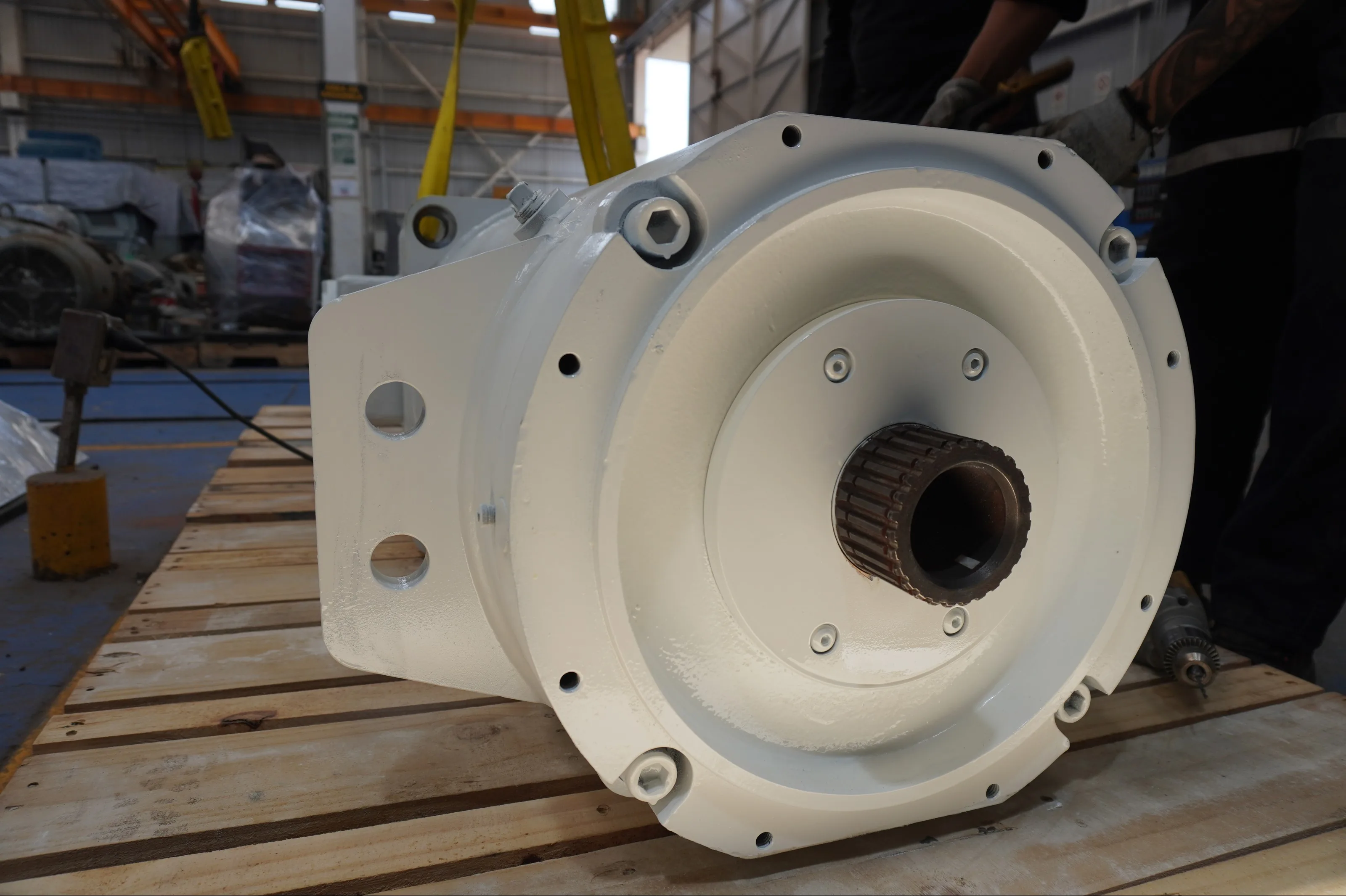
Joy 600128-0735 Historical Rewind – 250 HP 950 V
Reference only. This low-voltage motor is outside our current service scope. TEMISA accepts medium- and high-voltage motors only.
In short
The 600128-0735 is a 250 HP, 950 V, 1,775 rpm cutter motor on frame 20B350J. TEMISA rewound one in March 2026 for an underground mine in Mexico: it arrived grounded at 0.03 MΩ and left at 6,700 MΩ, PI 7.94, 0% surge unbalance, with new form-wound Class H coils, restored bearing fits and a balanced rotor.
Joy 600128-0735 nameplate data
| Part number | 600128-0735 |
|---|---|
| Power | 250 HP |
| Voltage | 950 V |
| Current | 145 A |
| Speed | 1,775 rpm |
| Frequency | 60 Hz |
| Frame | 20B350J |
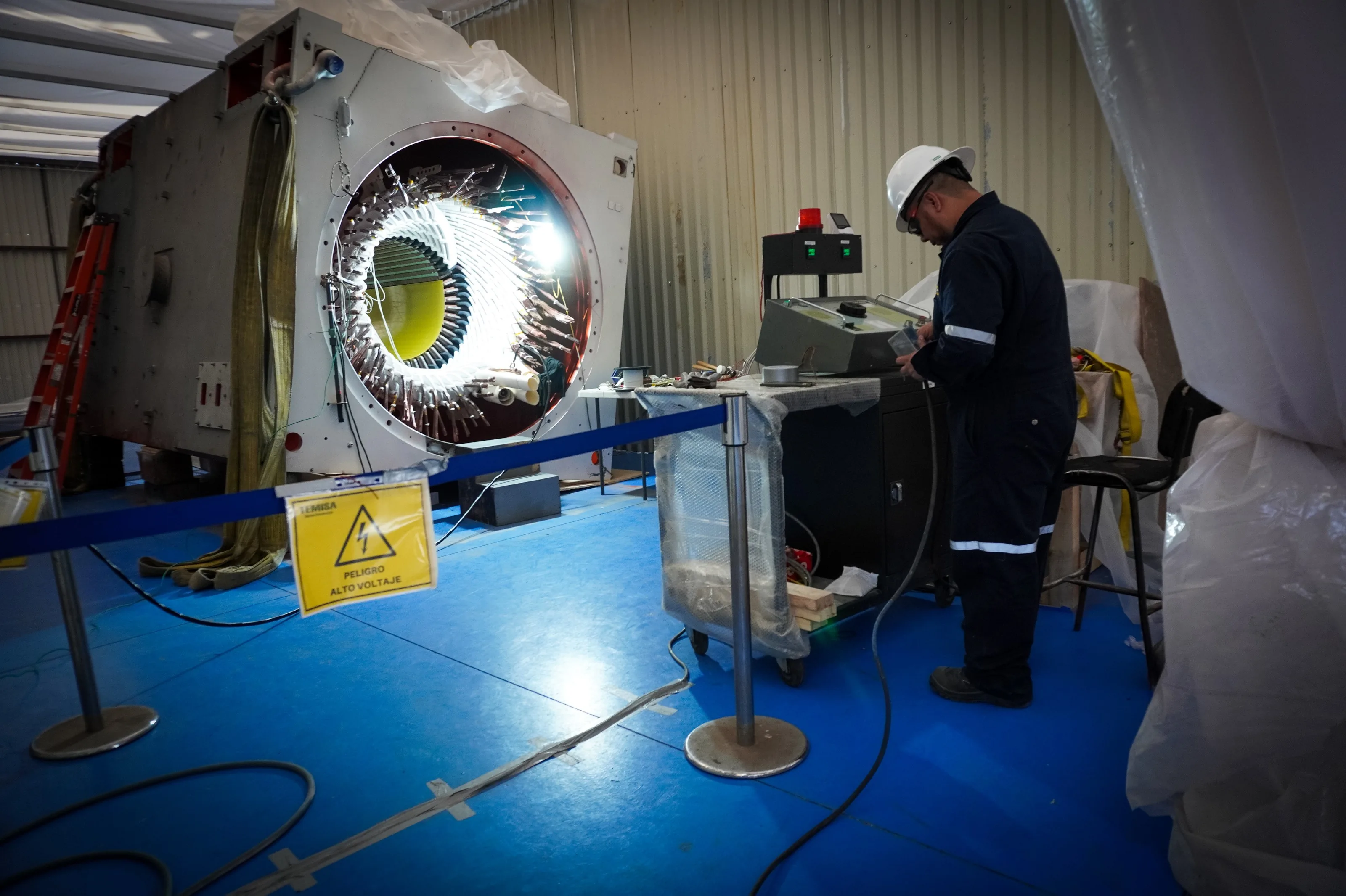
Application
Which continuous miners use the Joy 600128-0735?
A 250 HP, 950 V cutter motor on the same 20B350J frame used by other Joy 600128-series cutter motors. Confirm the application against your machine's parts book.
Source: TEMISA technical report TMS-CL-RE-02 Rev. 5, work order 2878, March 2026.
Underground mine, Mexico · March 2026
As received
- Insulation resistance 0.03 MΩ at 70 VDC: winding grounded, out of IEEE Std 43 limits.
- Phase resistance unbalance 1.3%: within IEEE Std 1415.
- Drive-end bearing housing fit out of ANSI/EASA AR100 tolerance.
- Both bearings damaged (NU 217 EC drive end, 6315/C3 opposite drive end).
- Rotor growler test: no open bars. Shaft: no deflection.
Work performed
What we did
- Stator rewound with new form-wound coils, Class H insulation.
- Dehydration, insulating varnish and controlled oven cure.
- Drive-end housing fit restored.
- New bearings induction-mounted and lubricated; new seals.
- Rotor dynamically balanced.
- Static and dynamic tests recorded before release.
Recorded results
As received vs. as released
Insulation resistance
As received
0.03 MΩ
at 70 VDC · grounded
Released
6,700 MΩ
at 510 VDC · PI 7.94
Rotor unbalance (A / C)
As received
20.0 / 31.0 g
initial
Released
2.0 / 2.0 g
final
Phase resistance unbalance
As received
1.3%
as received
Released
0.0%
116.2 mΩ × 3
Surge test, line to line
As received
—
winding grounded
Released
0%
at 3,930 V, all phases
Source: TEMISA report TMS-CL-RE-02 Rev. 5, work order 2878, March 2026.
Final test results, as recorded
| Phase resistance | 116.2 / 116.2 / 116.2 mΩ — 0.0% unbalance |
|---|---|
| Insulation resistance, 1 min at 510 VDC | 6,700 MΩ |
| Polarization index / DAR | 7.94 / 1.89 |
| Step-voltage hi-pot, final step | 5,103 VDC — 7,980 MΩ, 0.640 µA leakage |
| Surge test at 3,930 V | EAR L-L 0% on all three phases |
| RTDs (3) | 108.2 / 108.4 / 108.8 Ω at 21–22 °C |
| Rotor balance (A / C planes) | 20.0 g / 31.0 g initial → 2.0 g / 2.0 g final |
| Run test | 60 min energized; vibration 0.04 in/s max. |
Customer name withheld.
Historical process reference. These tables are not a current offer for this low-voltage model.
Scope of work
Documented repair process: winding and enclosure
| What we upgrade | What we never change |
|---|---|
| Stator rewound with new form-wound coils | Explosion-proof enclosure |
| Class H insulation system | Flame-path surfaces and their dimensions |
| Varnish treatment with dehydration and controlled oven cure | Lead entrances |
| Bearing fits restored to ANSI/EASA AR100 tolerances | Mounting and shaft dimensions |
| New bearings, induction-mounted, and new seals | Nameplate rating: HP, voltage and speed stay as built |
| Rotor dynamically balanced | |
| Temperature sensors (RTDs) tested |
Enclosure dimensions are not modified. Before a rebuilt explosion-proof motor goes back underground, the mine's qualified electrical person inspects it, as MSHA regulations require.
In our shop
What happens to your motor at TEMISA
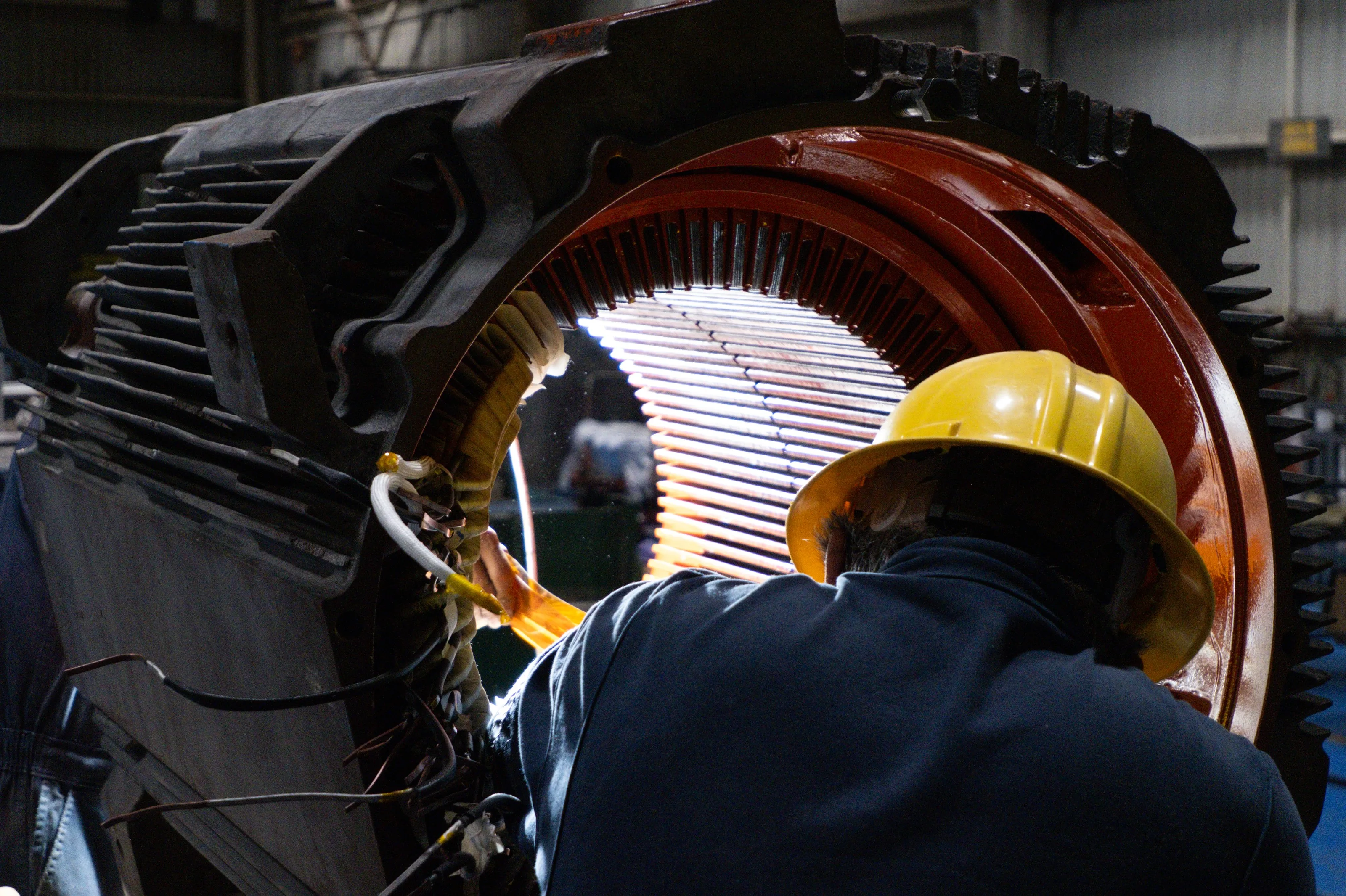 1
Teardown and diagnosis
The failed winding is exposed and documented before anything is quoted.
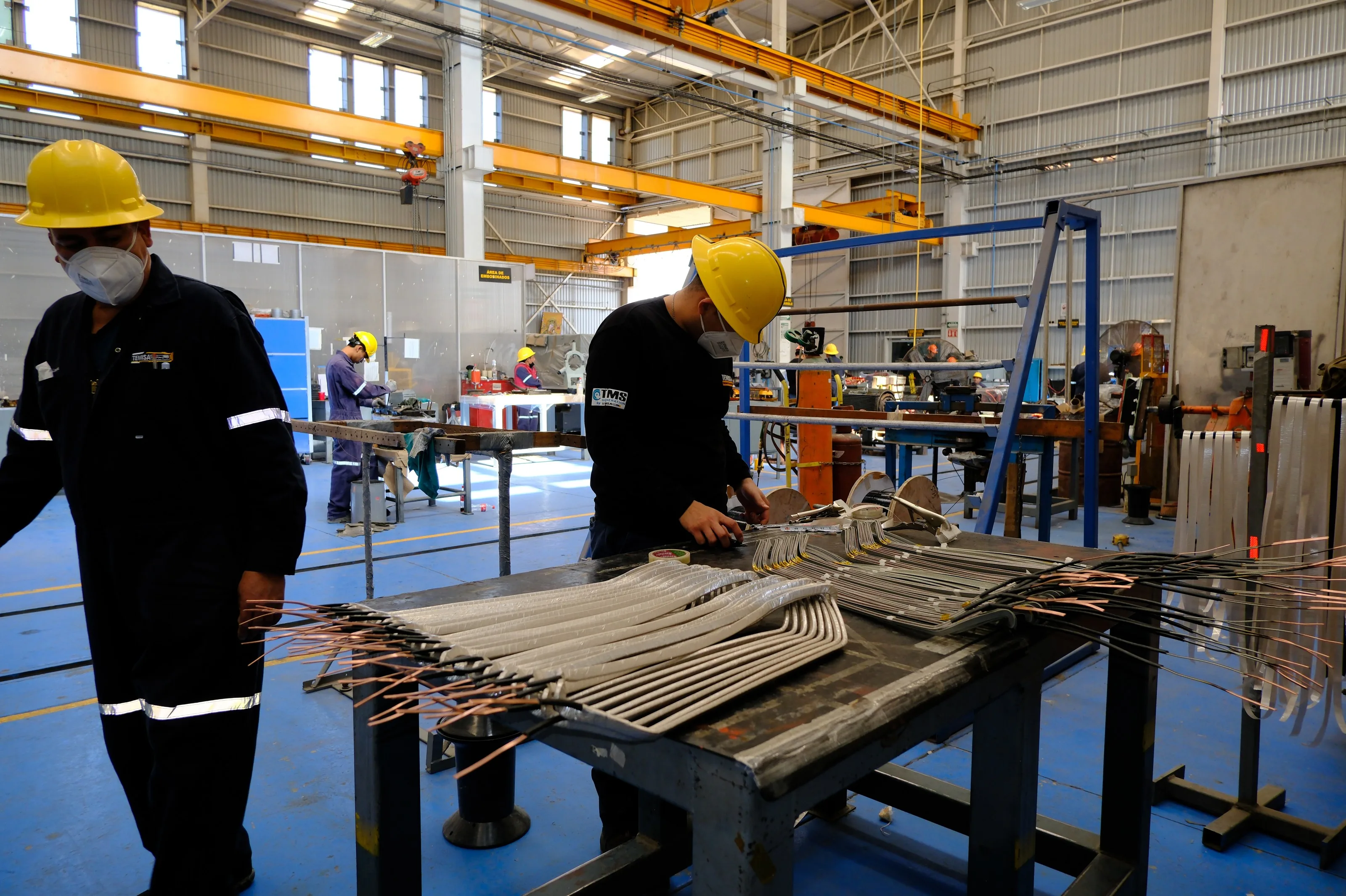 2
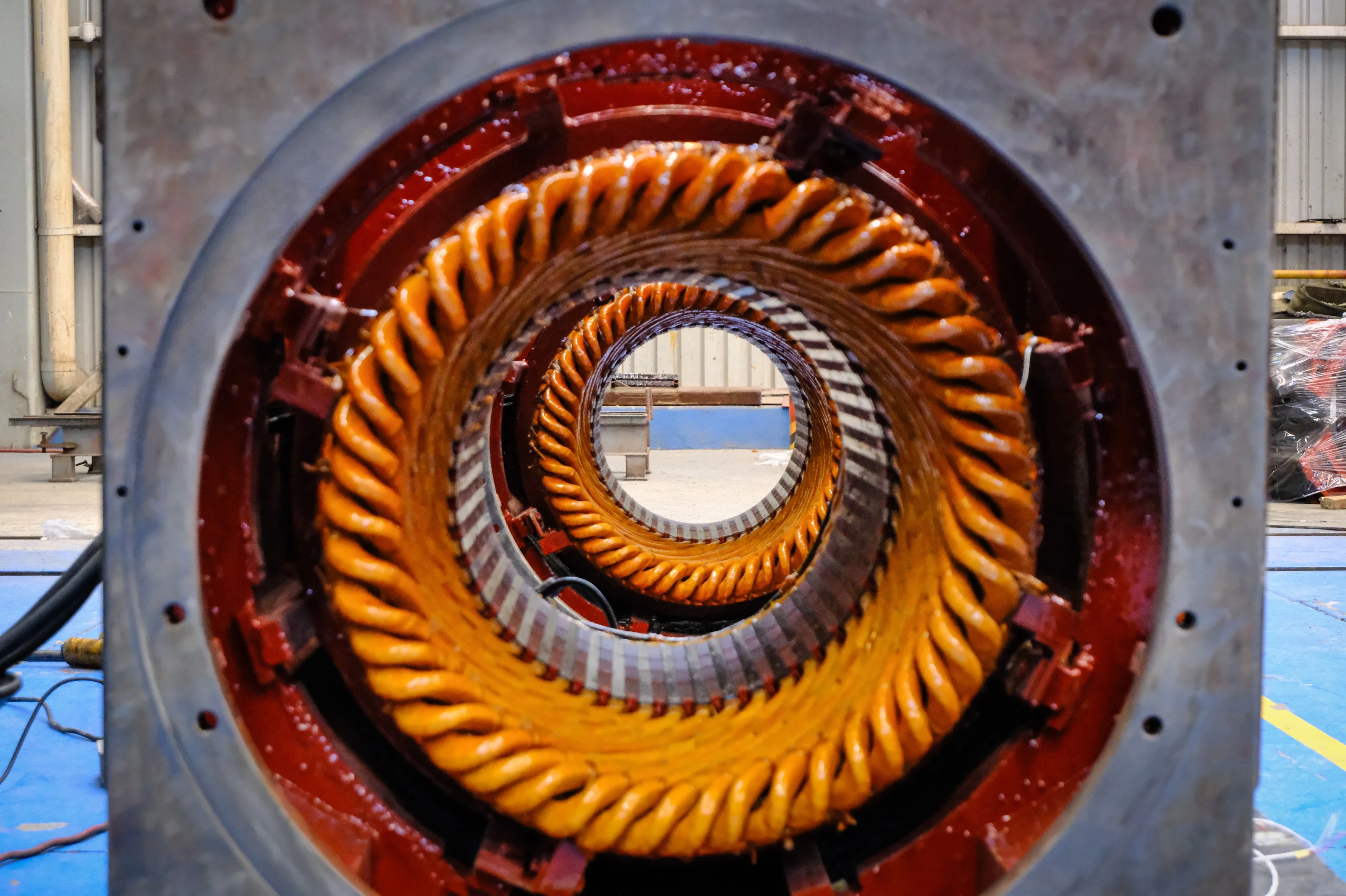
Form-wound coils
New coils are formed and taped in the shop; the core is checked first.
 3
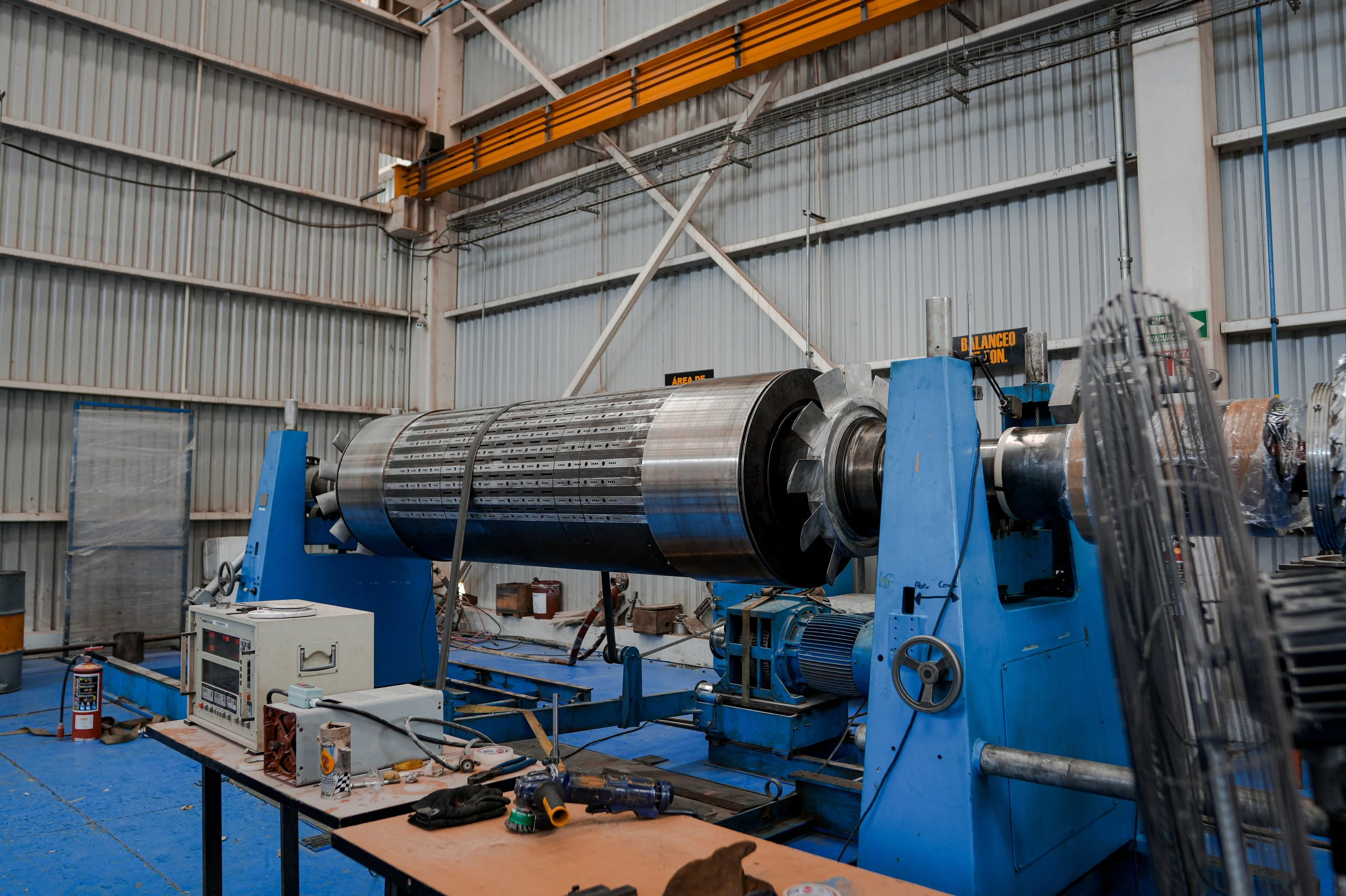
Varnish and oven cure
The winding is dehydrated, varnished and cured in a controlled oven.
 4
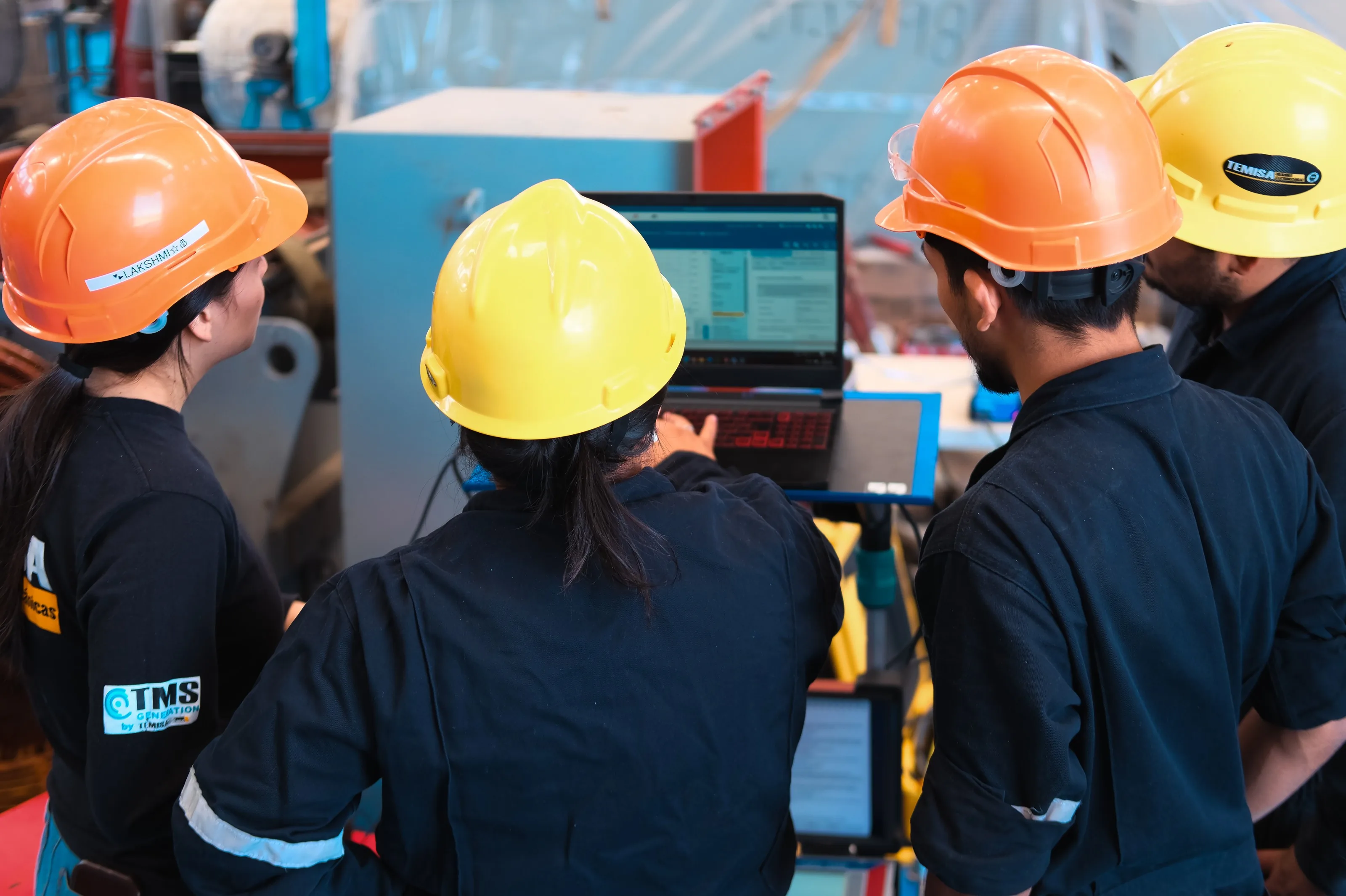
Dynamic balance
The rotor is balanced and the residual unbalance is recorded.
 5
Release tests
Static and dynamic tests are recorded before the motor ships.
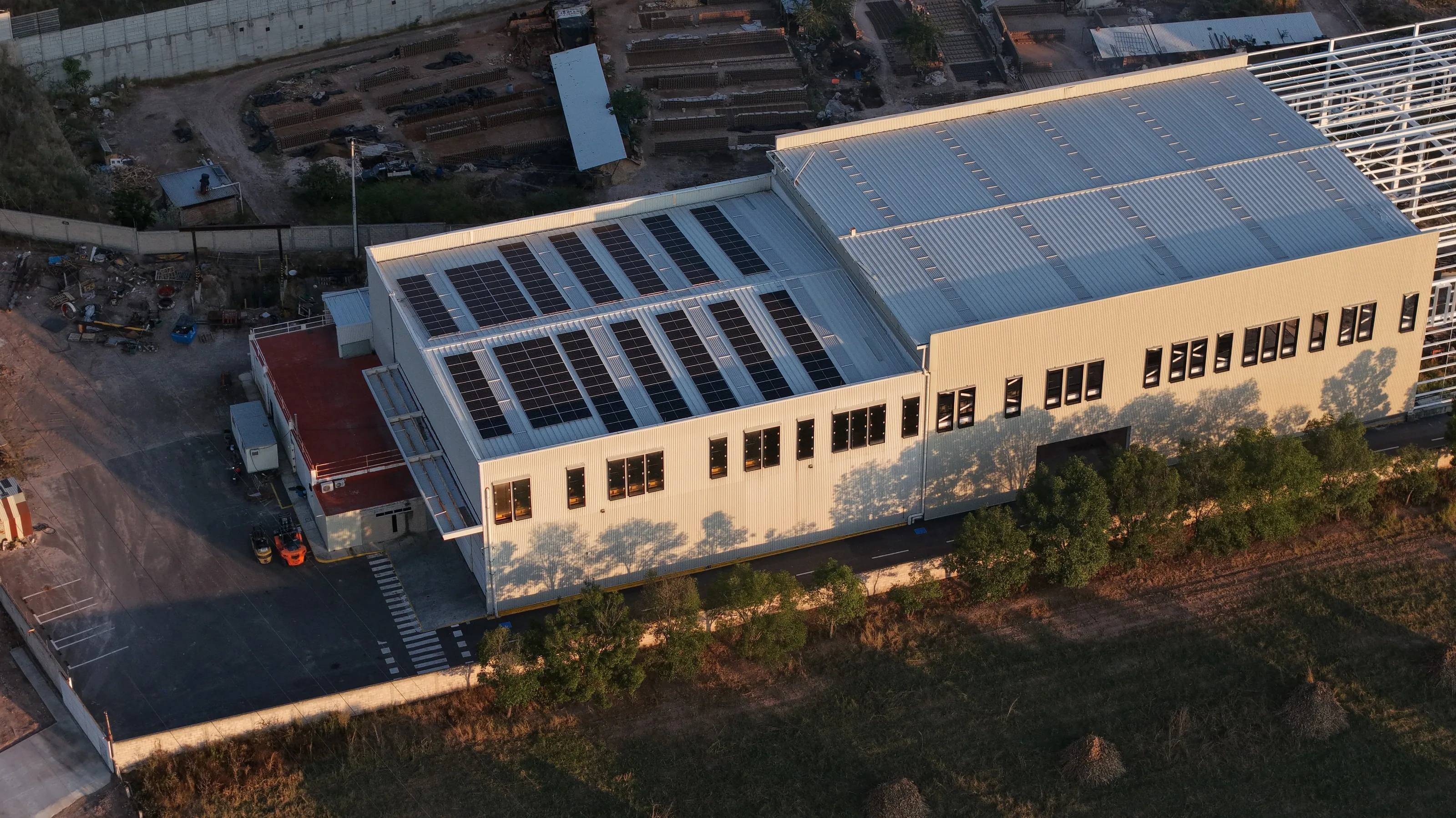
Photos taken at the TEMISA shop. They show the process, not a specific customer motor.
Release tests
Tests recorded for the historical Joy repair
| Test | Standard | Acceptance |
|---|---|---|
| Winding resistance, phase to phase | IEEE Std 1415 | Unbalance < 3% |
| Insulation resistance, 1 min | IEEE Std 43 | > 100 MΩ |
| Polarization index and dielectric absorption | IEEE Std 43 | PI > 2.0 · DAR > 1.5 |
| Step-voltage DC high-potential | IEEE Std 95 | > 100 MΩ, leakage < 1 mA |
| Surge comparison (turn-to-turn) | IEEE Std 522 | EAR L-L < 3% · P-P < 10% |
| Core loop test with thermography | Shop procedure | Uniform core temperature |
| Rotor growler test | Shop procedure | No open bars |
| Dynamic balance of rotor | ISO 21940 | Residual unbalance recorded |
| 60-minute run test: current, temperature, vibration | Shop procedure | Vibration < 0.11 in/s |
Other Joy cutter motors
Have a different motor above 1,000 V?
Check its nameplate and request a scope review through our medium- and high-voltage enquiry form.
Medium/high-voltage enquiries