
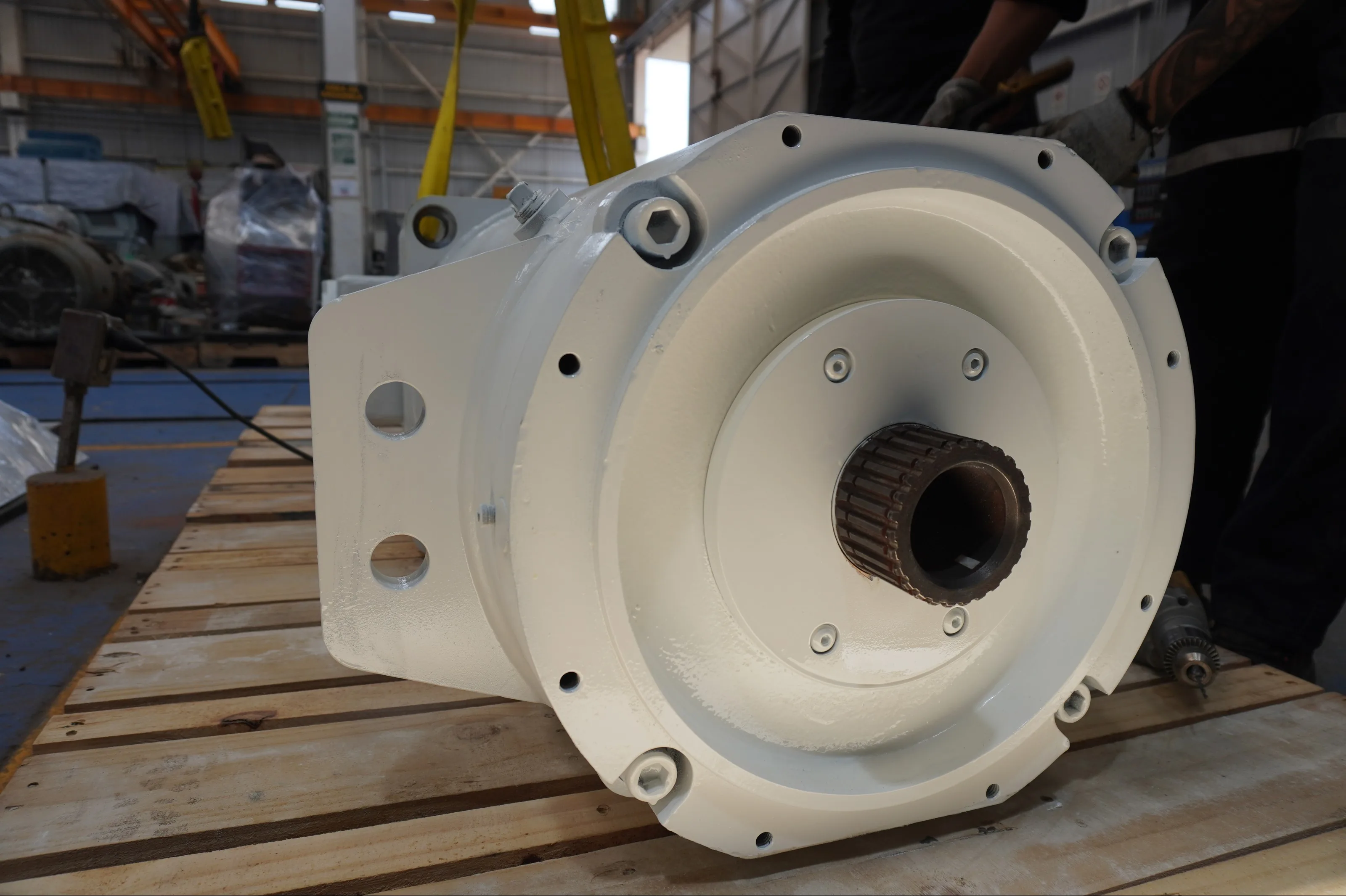
Joy 600128-1574 Motor Reference – 210 HP 950 V
Reference only. This low-voltage motor is outside our current service scope. TEMISA accepts medium- and high-voltage motors only.
In short
The Joy 600128-1574 is a 210 HP, 550/950 V, 1,760 rpm AC motor on frame 20B350J, listed with and without clutch. It shares the 20B350J frame with the 250 HP motor TEMISA has already rewound. This rating is a technical reference only: TEMISA no longer accepts low-voltage motors, including this model.
Joy 600128-1574 nameplate data
| Part number | 600128-1574 |
|---|---|
| Power | 210 HP |
| Voltage | 550 / 950 V |
| Speed | 1,760 rpm |
| Frame | 20B350J |
| Variants | With and without clutch |
Application
Which continuous miners use the Joy 600128-1574?
The 600128-1574 appears in older Joy continuous miner fleets. Confirm the application against your machine's parts book; this low-voltage model is outside our current service scope.
Source: Rating: Davis Electric (Fairmont, WV) public Joy motor exchange inventory.
Historical process reference. These tables are not a current offer for this low-voltage model.
Scope of work
Documented repair process: winding and enclosure
| What we upgrade | What we never change |
|---|---|
| Stator rewound with new form-wound coils | Explosion-proof enclosure |
| Class H insulation system | Flame-path surfaces and their dimensions |
| Varnish treatment with dehydration and controlled oven cure | Lead entrances |
| Bearing fits restored to ANSI/EASA AR100 tolerances | Mounting and shaft dimensions |
| New bearings, induction-mounted, and new seals | Nameplate rating: HP, voltage and speed stay as built |
| Rotor dynamically balanced | |
| Temperature sensors (RTDs) tested |
Enclosure dimensions are not modified. Before a rebuilt explosion-proof motor goes back underground, the mine's qualified electrical person inspects it, as MSHA regulations require.
In our shop
What happens to your motor at TEMISA
 1
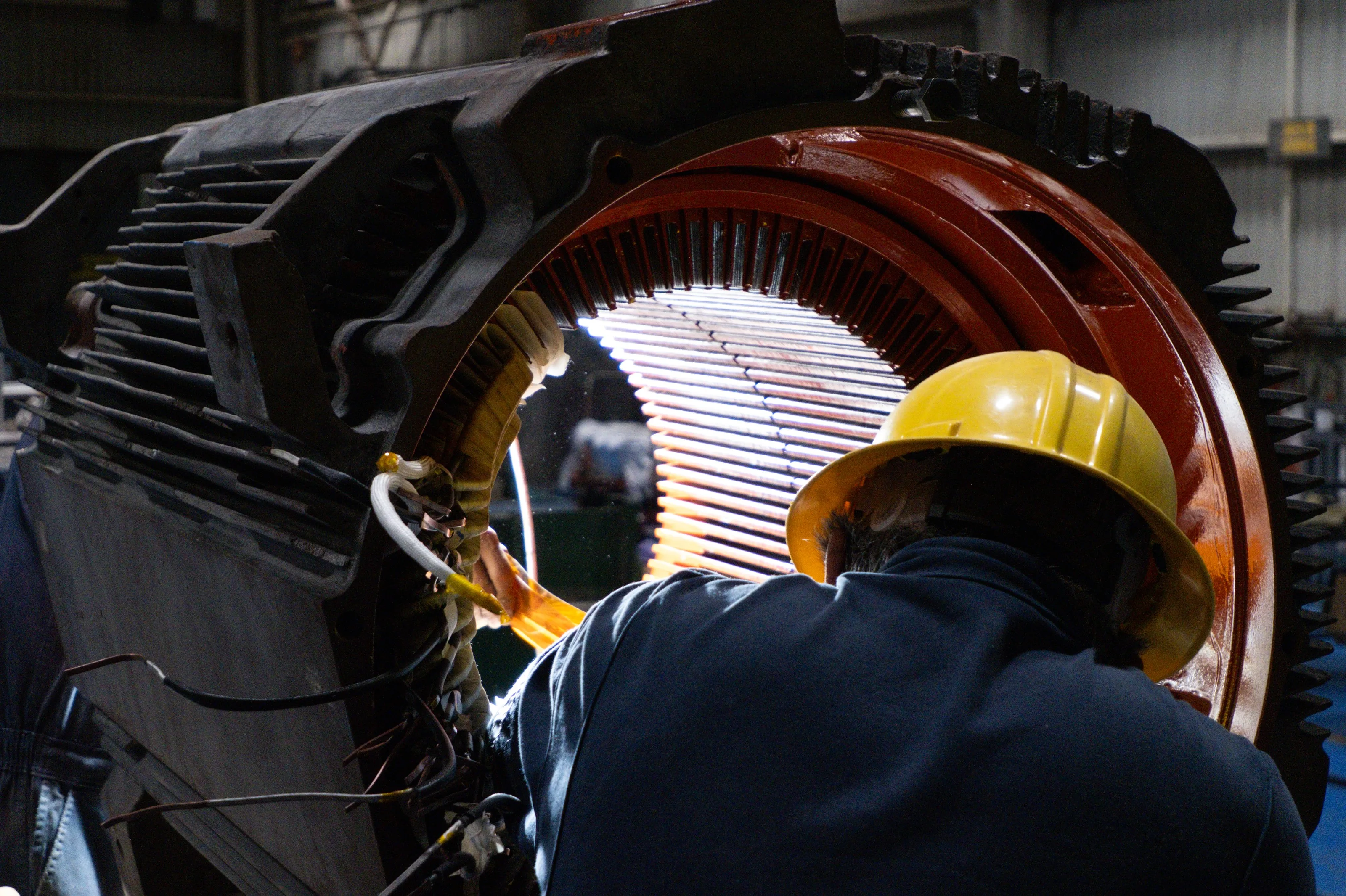
Teardown and diagnosis
The failed winding is exposed and documented before anything is quoted.
 2
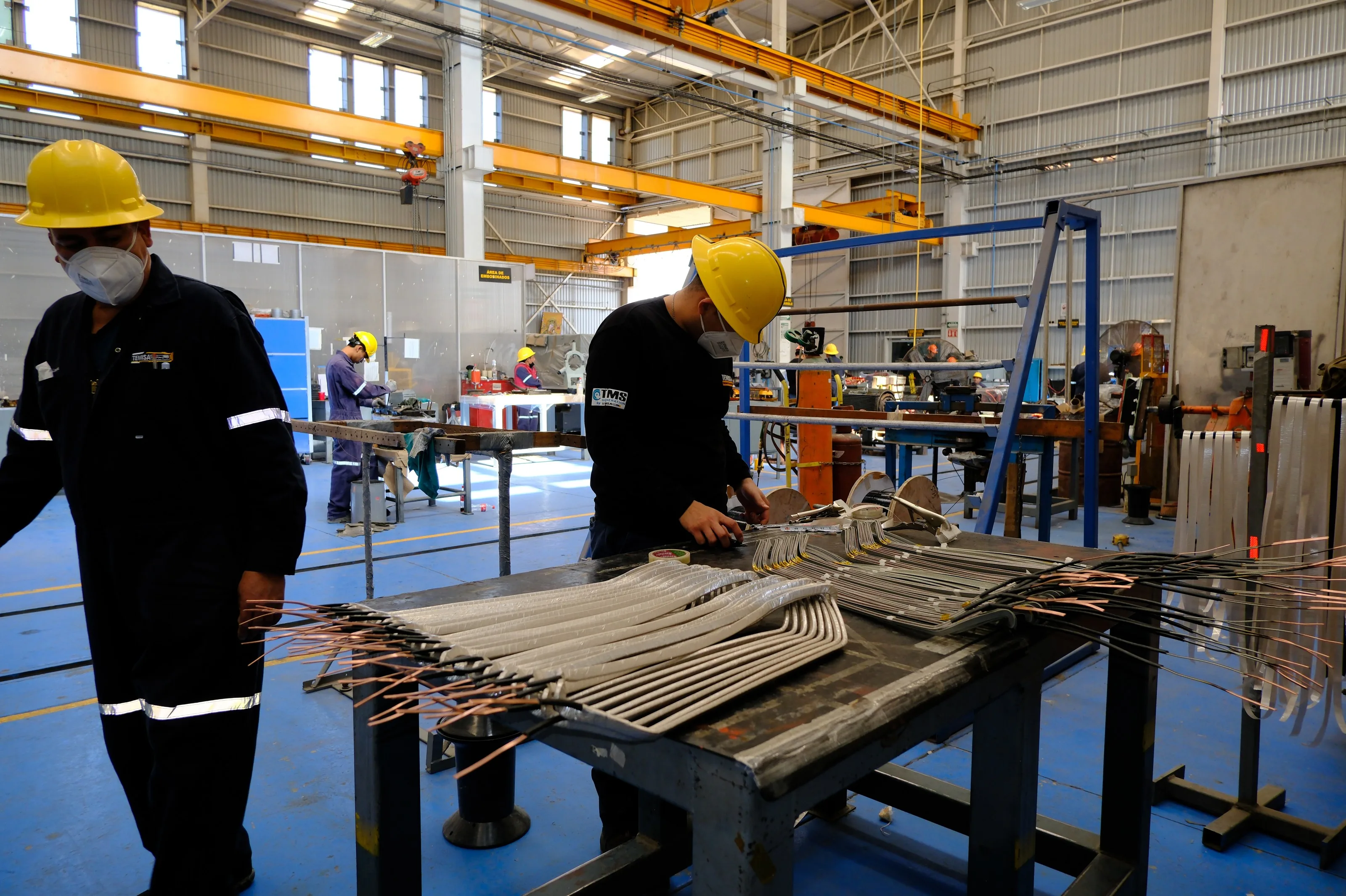
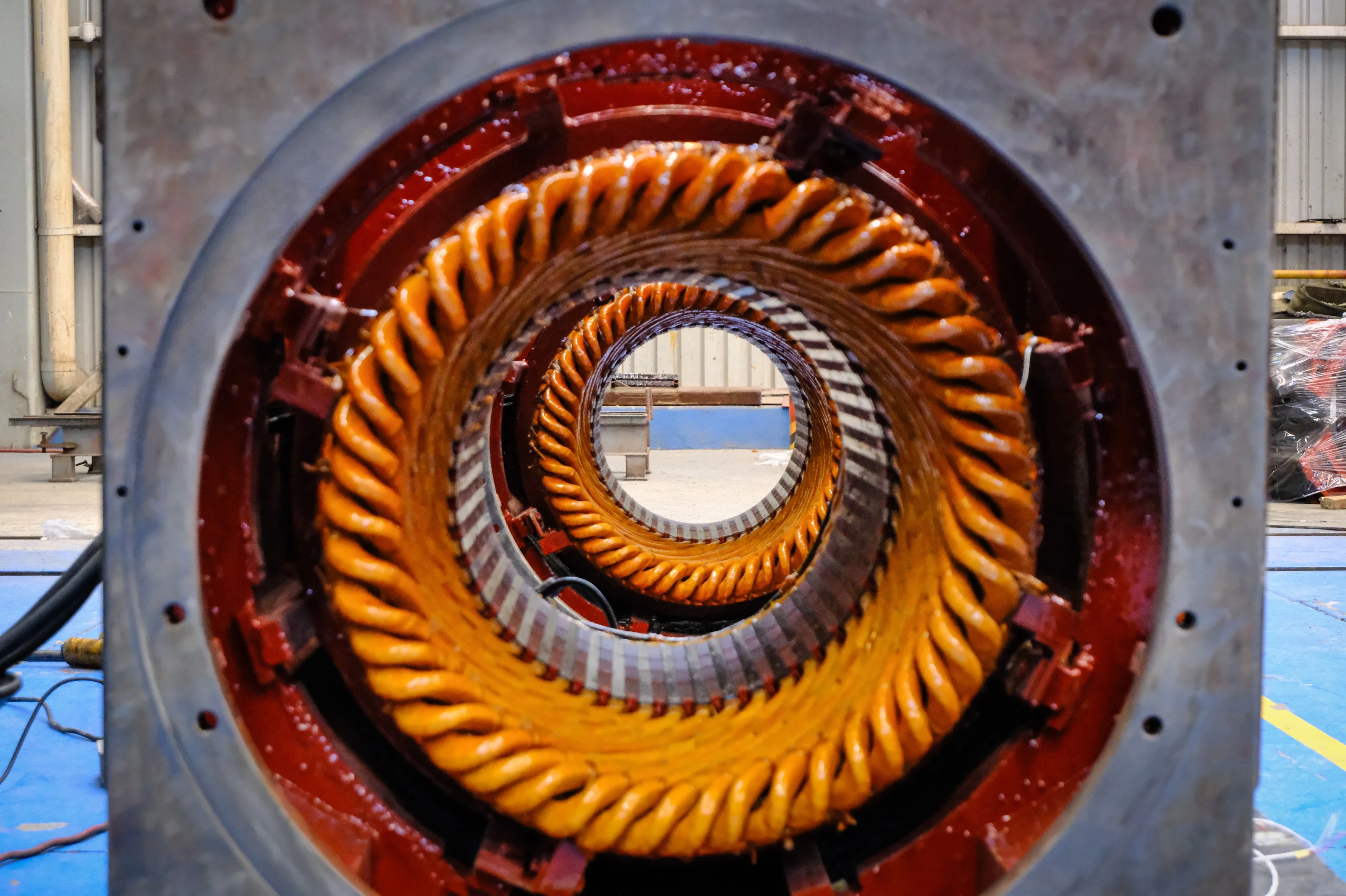
Form-wound coils
New coils are formed and taped in the shop; the core is checked first.
 3
Varnish and oven cure
The winding is dehydrated, varnished and cured in a controlled oven.
 4
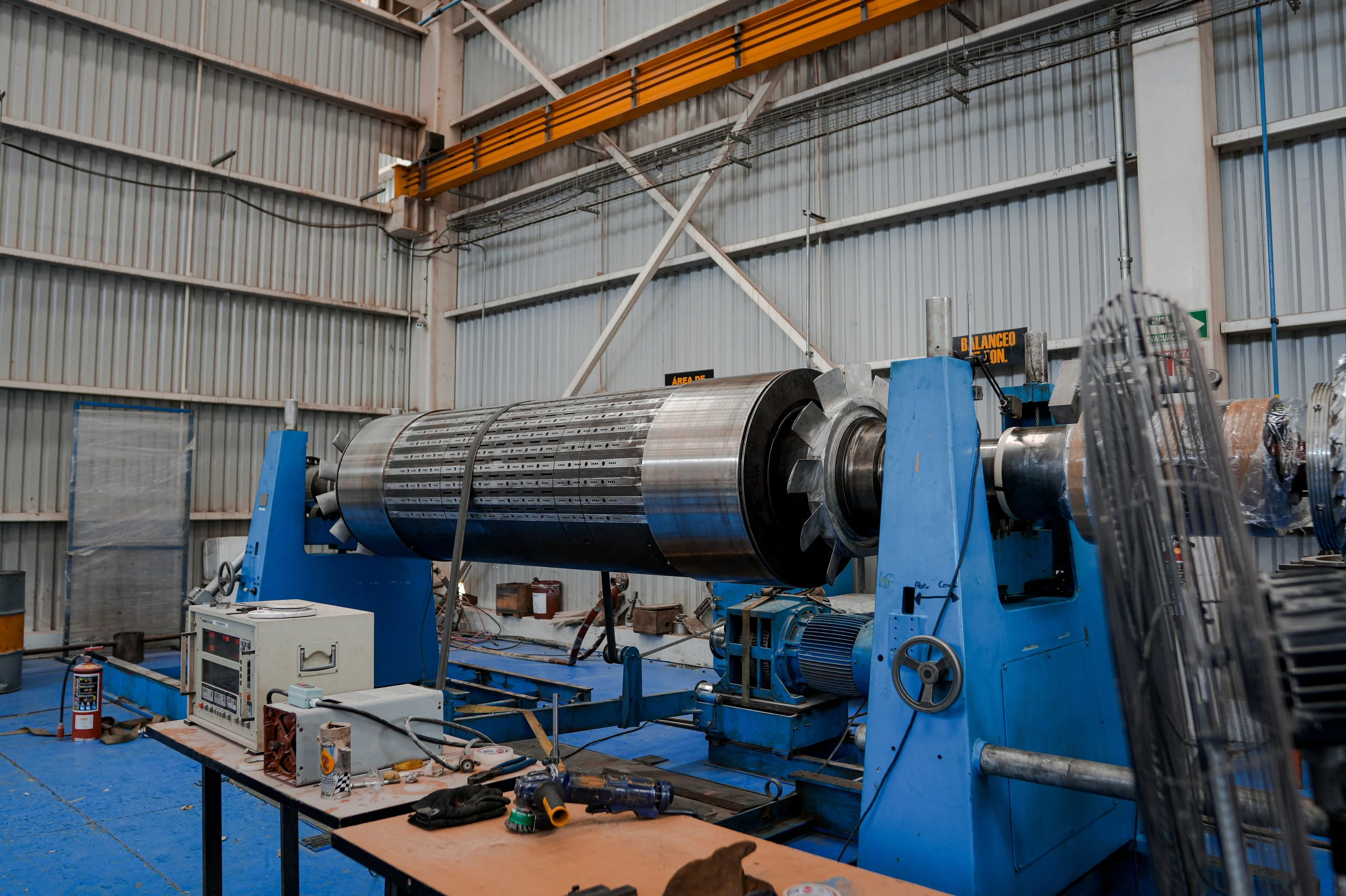
Dynamic balance
The rotor is balanced and the residual unbalance is recorded.
 5
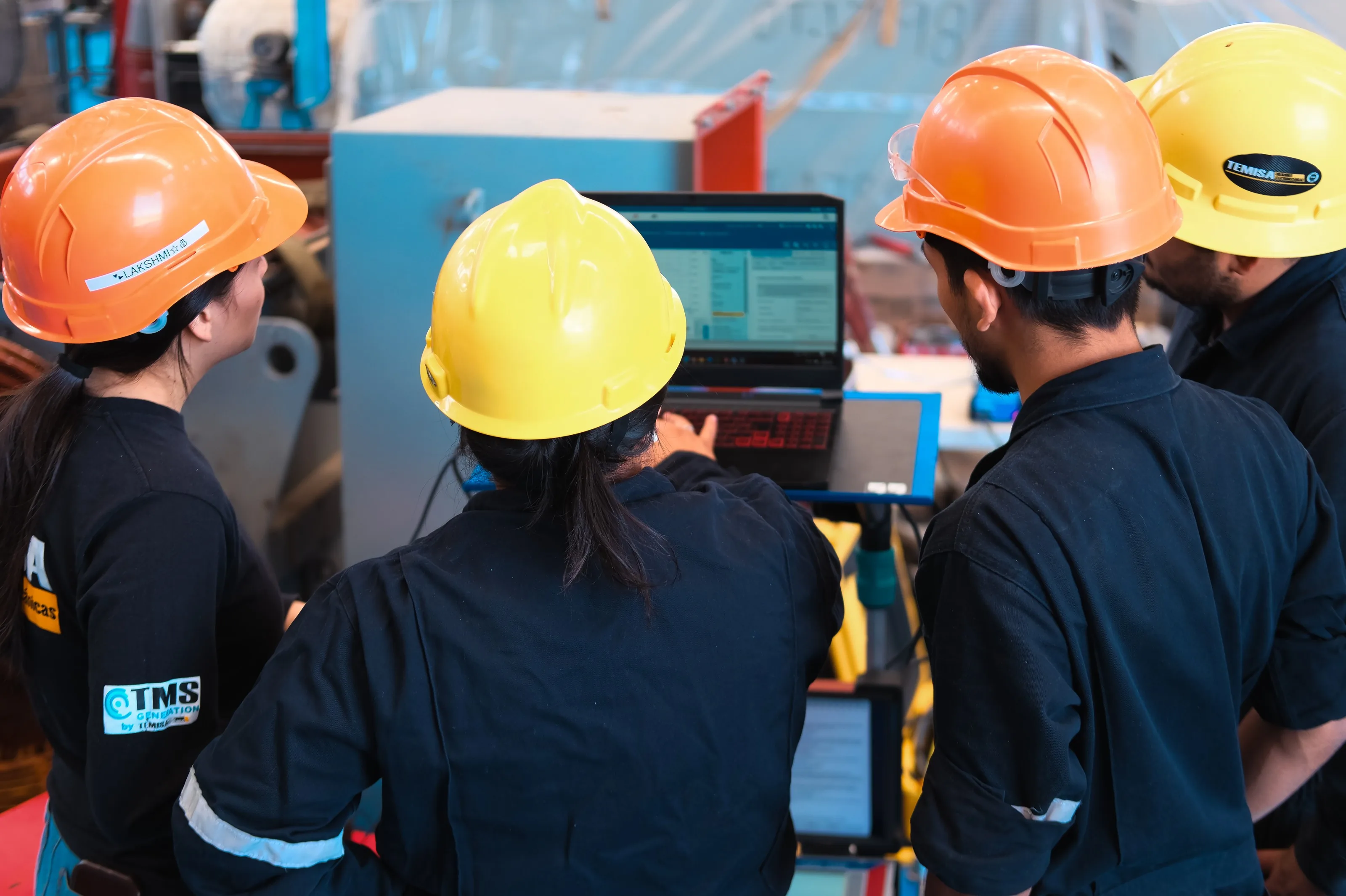
Release tests
Static and dynamic tests are recorded before the motor ships.
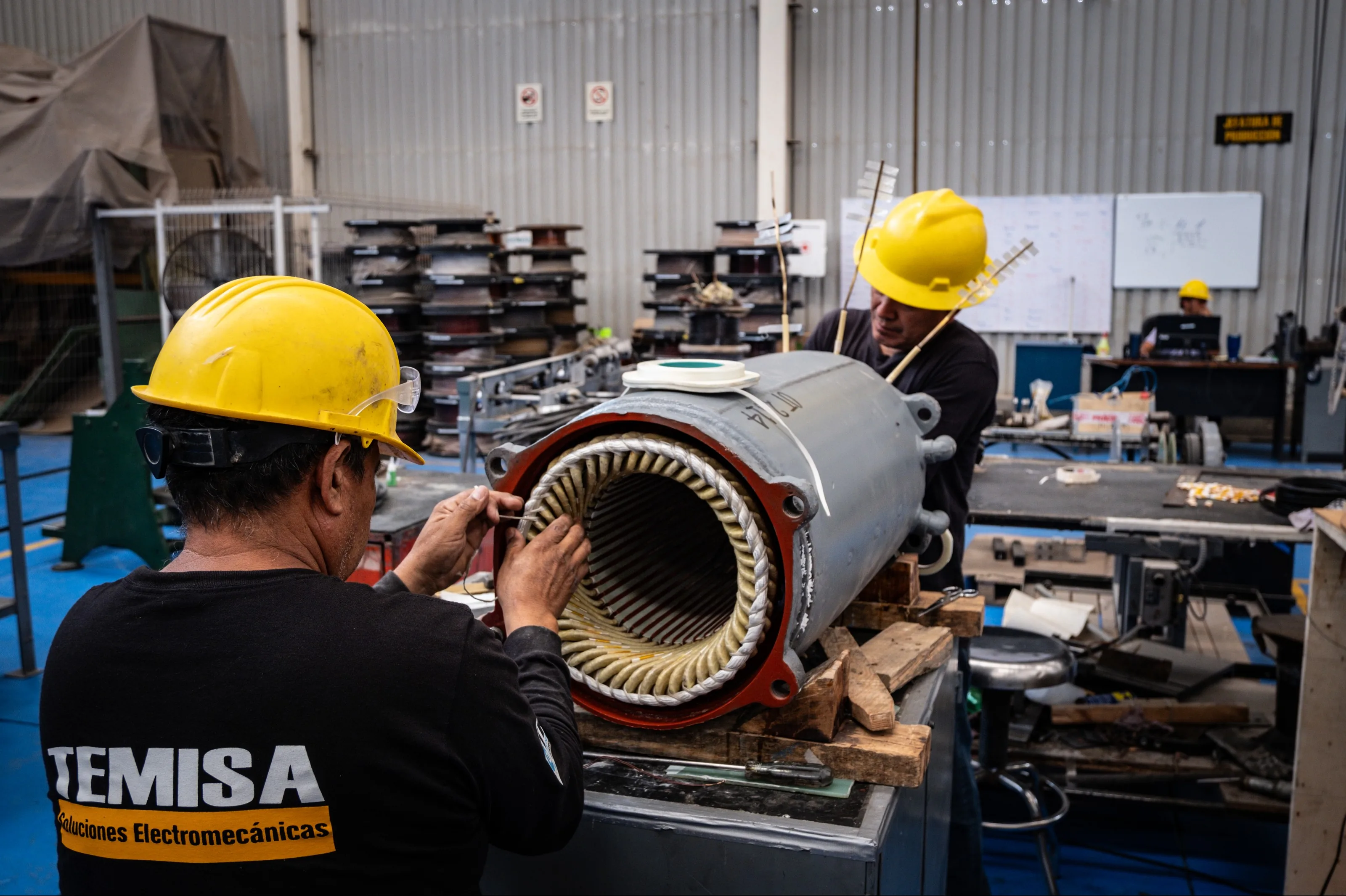
Photos taken at the TEMISA shop. They show the process, not a specific customer motor.
Release tests
Tests recorded for the historical Joy repair
| Test | Standard | Acceptance |
|---|---|---|
| Winding resistance, phase to phase | IEEE Std 1415 | Unbalance < 3% |
| Insulation resistance, 1 min | IEEE Std 43 | > 100 MΩ |
| Polarization index and dielectric absorption | IEEE Std 43 | PI > 2.0 · DAR > 1.5 |
| Step-voltage DC high-potential | IEEE Std 95 | > 100 MΩ, leakage < 1 mA |
| Surge comparison (turn-to-turn) | IEEE Std 522 | EAR L-L < 3% · P-P < 10% |
| Core loop test with thermography | Shop procedure | Uniform core temperature |
| Rotor growler test | Shop procedure | No open bars |
| Dynamic balance of rotor | ISO 21940 | Residual unbalance recorded |
| 60-minute run test: current, temperature, vibration | Shop procedure | Vibration < 0.11 in/s |
Other Joy cutter motors
Have a different motor above 1,000 V?
Check its nameplate and request a scope review through our medium- and high-voltage enquiry form.
Medium/high-voltage enquiries