

Medium- and High-Voltage Mining Motor Repair
Industrial motor repair and rewind for mines and motor repair shops. Low-, medium- and high-voltage motors, subject to nameplate and technical scope review.
In short
TEMISA assesses low-, medium- and high-voltage mining motors for repair, rewind and testing, including the 550 V and 950 V Joy models documented below. Send the motor nameplate voltage and failure details.
- Low, medium and high voltage; nameplate review required.
- Class H form-wound stator rewind.
- Bearing fits restored to ANSI/EASA AR100.
- Acceptance tests defined for the specific motor and agreed scope.
Documented medium-voltage work
Motor repair, commissioning and maintenance
3,100 kW · 4 kV mill motor commissioning
View documented case (Spanish)7,000 HP · 6.6 kV compressor motor maintenance
View documented case (Spanish)These cases describe different scopes. Commissioning and maintenance are not presented as rewinding. Send the nameplate, failure symptoms and location so the workshop can define the applicable scope and tests.
Motor repair shops
Enquiries for low-, medium- and high-voltage motors. Each scope, test plan and shipping arrangement is evaluated from the nameplate and diagnosis.
Industrial mines
Assessment of medium- and high-voltage motors used in mining processes. Check the motor voltage itself, not the supply voltage of the mine or its transformer.
The process and test tables below describe the documented historical Joy repair. The test plan for a new medium- or high-voltage motor is defined separately after technical review.
Scope of work
Documented repair process: winding and enclosure
| What we upgrade | What we never change |
|---|---|
| Stator rewound with new form-wound coils | Explosion-proof enclosure |
| Class H insulation system | Flame-path surfaces and their dimensions |
| Varnish treatment with dehydration and controlled oven cure | Lead entrances |
| Bearing fits restored to ANSI/EASA AR100 tolerances | Mounting and shaft dimensions |
| New bearings, induction-mounted, and new seals | Nameplate rating: HP, voltage and speed stay as built |
| Rotor dynamically balanced | |
| Temperature sensors (RTDs) tested |
Enclosure dimensions are not modified. Before a rebuilt explosion-proof motor goes back underground, the mine's qualified electrical person inspects it, as MSHA regulations require.
In our shop
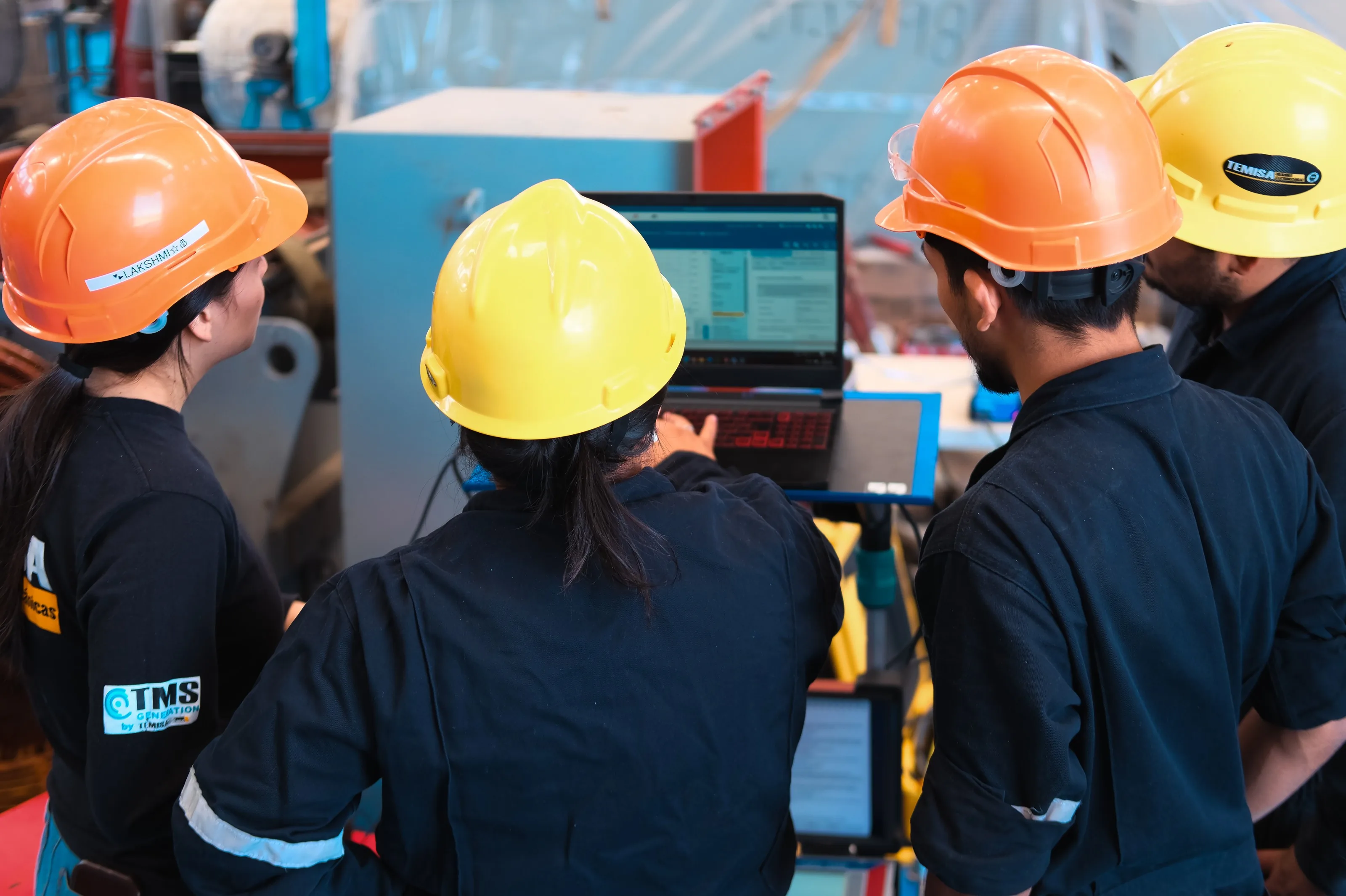
What happens to your motor at TEMISA
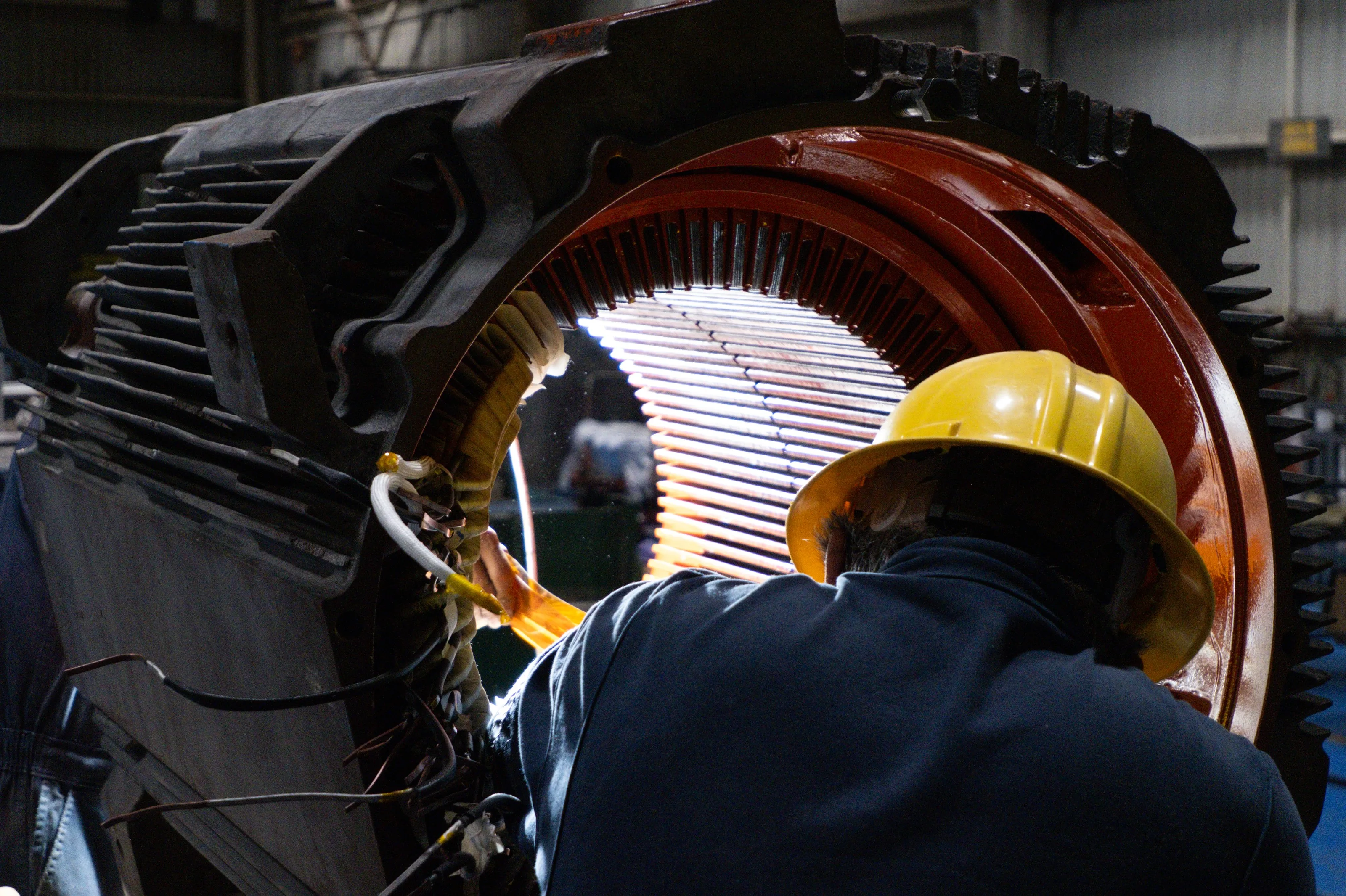 1
Teardown and diagnosis
The failed winding is exposed and documented before anything is quoted.
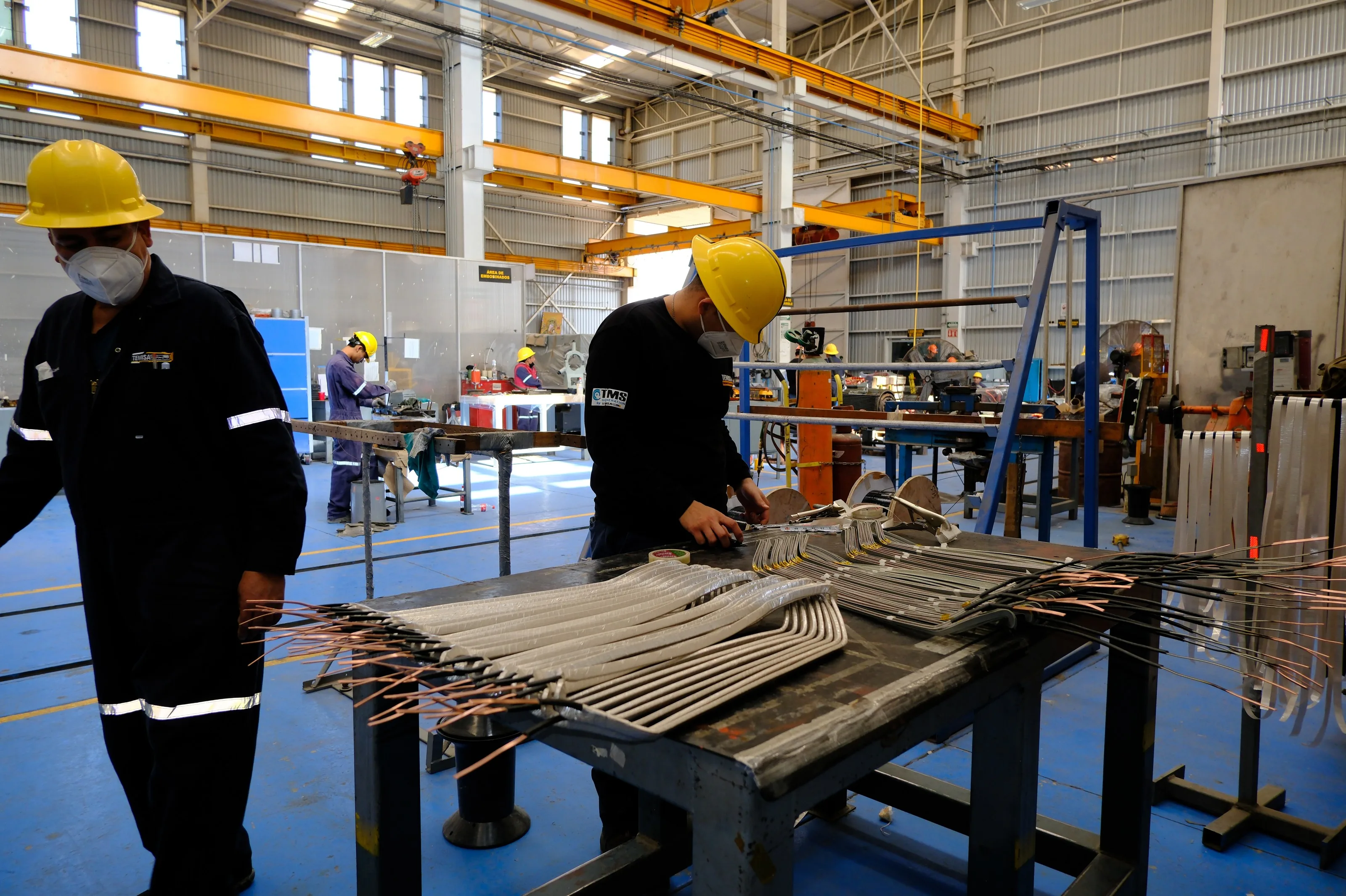 2
Form-wound coils
New coils are formed and taped in the shop; the core is checked first.
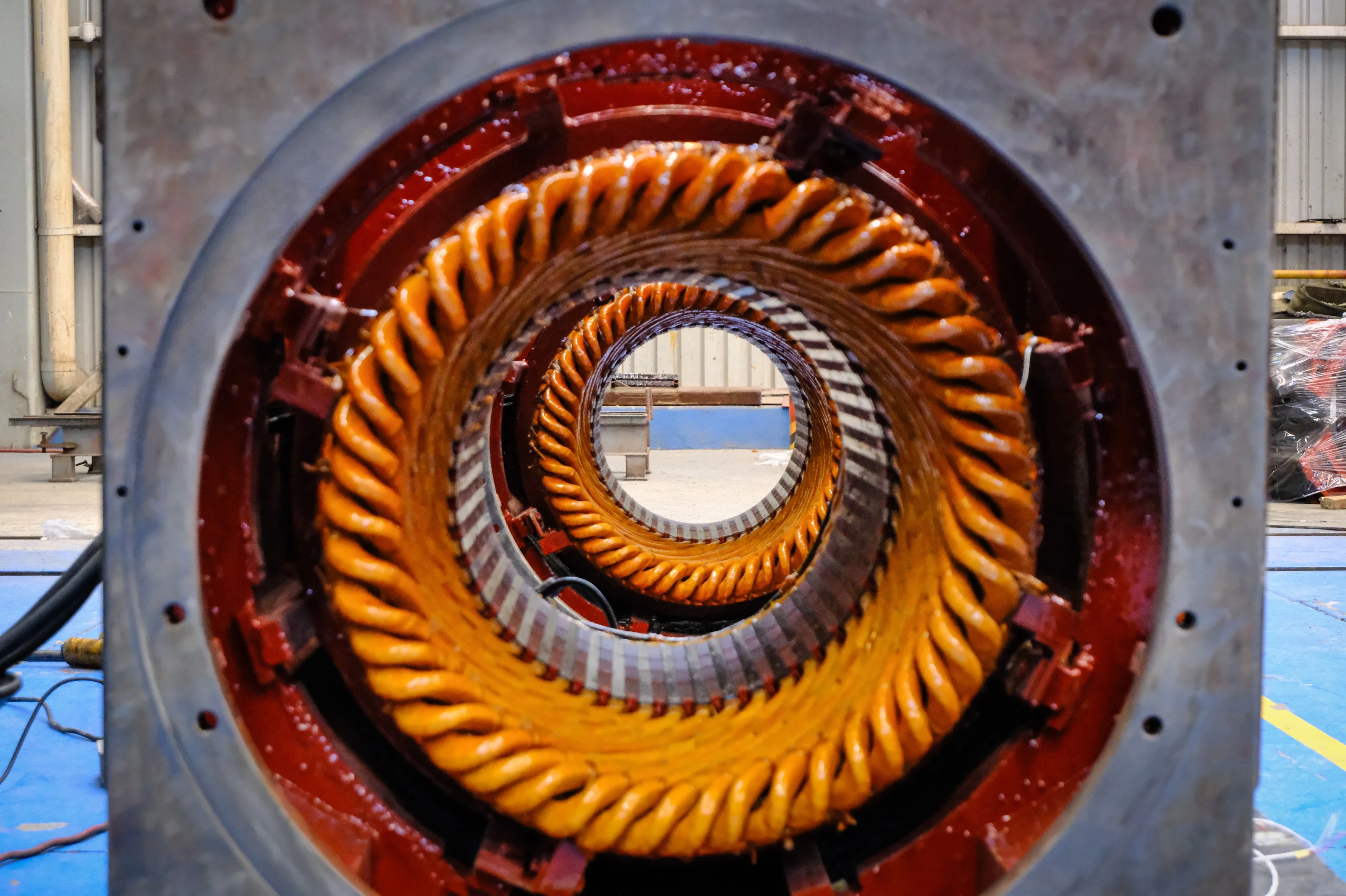 3
Varnish and oven cure
The winding is dehydrated, varnished and cured in a controlled oven.
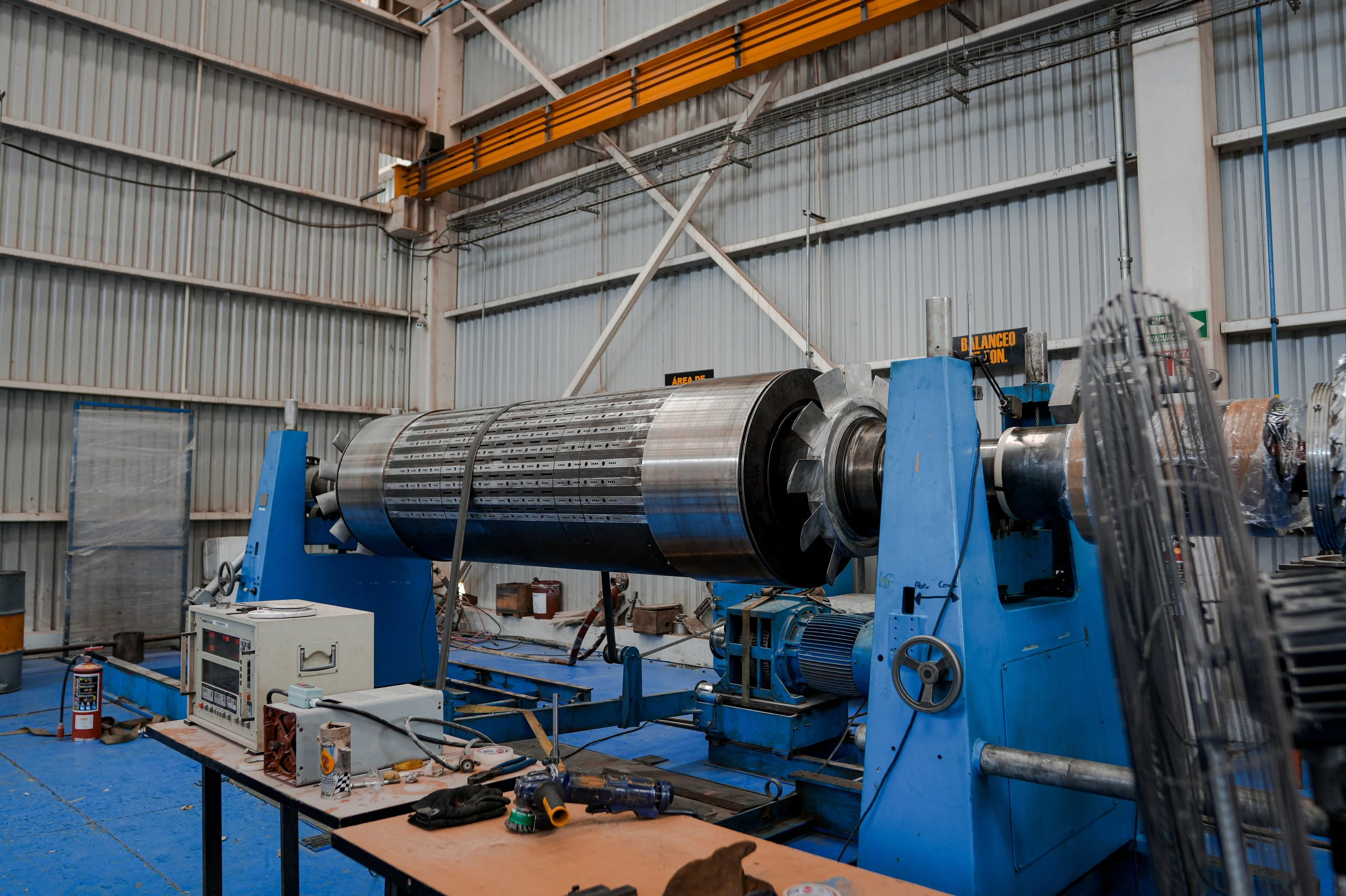 4
Dynamic balance
The rotor is balanced and the residual unbalance is recorded.
 5
Release tests
Static and dynamic tests are recorded before the motor ships.
Photos taken at the TEMISA shop. They show the process, not a specific customer motor.
Release tests
Tests recorded for the historical Joy repair
| Test | Standard | Acceptance |
|---|---|---|
| Winding resistance, phase to phase | IEEE Std 1415 | Unbalance < 3% |
| Insulation resistance, 1 min | IEEE Std 43 | > 100 MΩ |
| Polarization index and dielectric absorption | IEEE Std 43 | PI > 2.0 · DAR > 1.5 |
| Step-voltage DC high-potential | IEEE Std 95 | > 100 MΩ, leakage < 1 mA |
| Surge comparison (turn-to-turn) | IEEE Std 522 | EAR L-L < 3% · P-P < 10% |
| Core loop test with thermography | Shop procedure | Uniform core temperature |
| Rotor growler test | Shop procedure | No open bars |
| Dynamic balance of rotor | ISO 21940 | Residual unbalance recorded |
| 60-minute run test: current, temperature, vibration | Shop procedure | Vibration < 0.11 in/s |
Reference job · March 2026
Joy 600128-0735, 250 HP 950 V: grounded winding to 6,700 MΩ
A cutter motor from an underground mine in Mexico arrived with its winding grounded at 0.03 MΩ and both bearings damaged. It left with a new Class H form-wound winding, restored bearing fits, a balanced rotor, 6,700 MΩ insulation resistance, PI 7.94 and 0% surge unbalance.
Joy cutter motors · 550 V and 950 V
Joy motor references and a historical repair
Joy 600128-716
235 HP · 950 V
View reference detailsJoy 600128-1574
210 HP · 550 / 950 V
View reference detailsJoy 600128-0735
250 HP · 950 V · job completed by TEMISA
View reference detailsSend the nameplate of your 550 V or 950 V Joy motor and we confirm the repair scope, tests and lead time. The original ratings and historical test results are kept for reference.
Credentials
Who does the work
- CFE LAPEM qualification
- Supplier qualification certificate 053/26 (specification W6000-20, motors), issued February 20, 2026, valid through May 20, 2027; report R-N01328-9; Talleres Electromecánicos Industriales Sainz, S.A. de C.V., Tlajomulco plant. Literal scope: in-plant service to motors at rated voltage up to 1.5 kV; from 150 to 6,500 HP it includes coils; from 6,500 to 15,000 HP it is limited to cleaning, varnishing, testing and mechanical work; dynamic balancing approved up to 15 t. It is a credential, not the limit of the service offer (low-, medium- and high-voltage industrial motors, subject to nameplate review).
- Quality management and repair process
- ISO 9001:2015 certificate IQS/3409/2026, valid September 24, 2026 through September 23, 2029. Repair processes follow ANSI/EASA AR100 (a process standard, not a certification).
- Plant
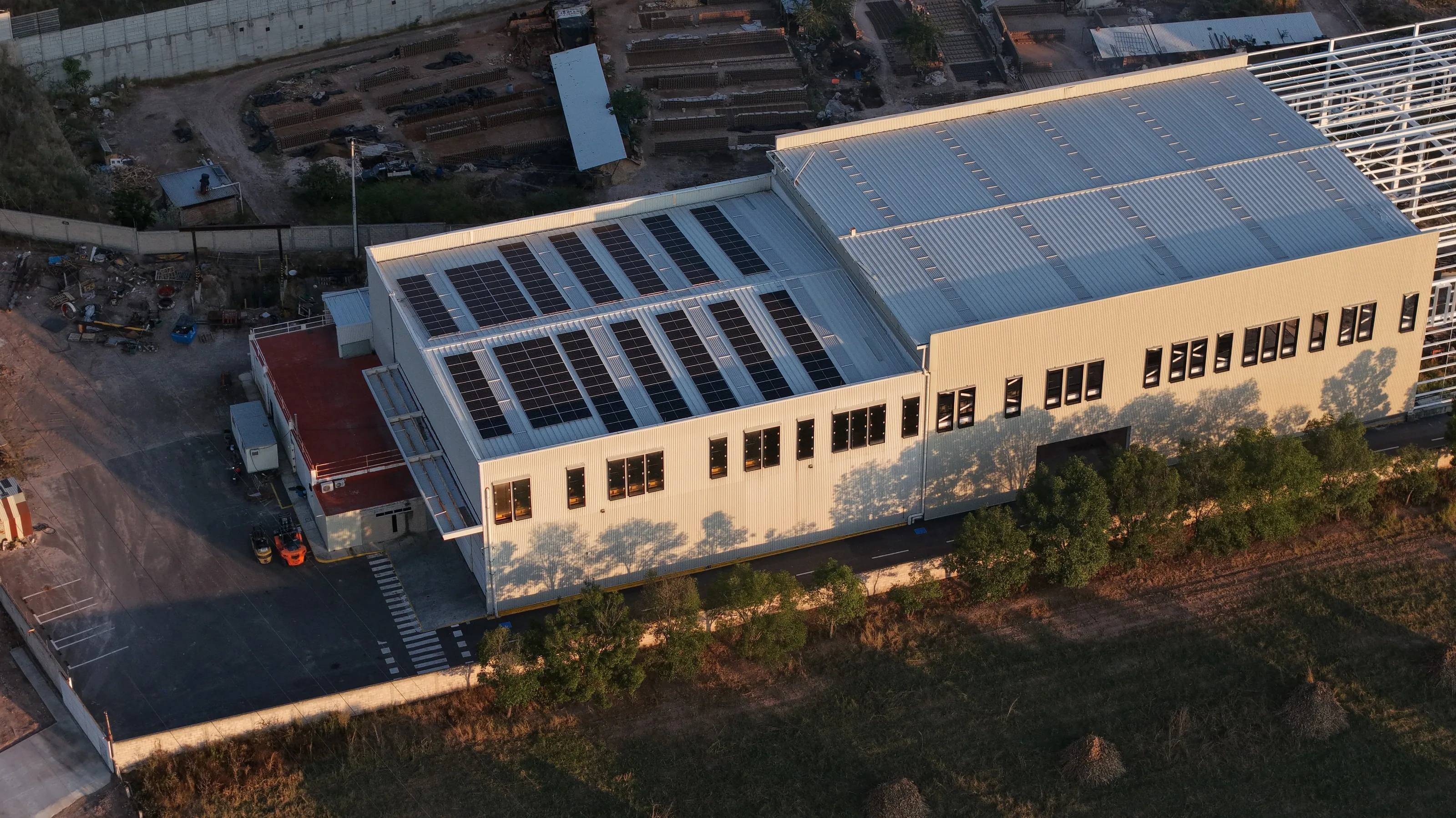
- 5,600 m² shop in Tlajomulco de Zúñiga, Jalisco, Mexico, with overhead cranes up to 60 t. Founded 1954.
FAQ
Frequently asked questions
Other questions: write to ventas@temisa.mx and an engineer will answer.
Which motor voltages do you accept?
Low, medium and high voltage, including 550 V and 950 V Joy cutter motors, subject to nameplate review.
Why are 950 V Joy motors still documented here?
The pages preserve technical references and a real March 2026 repair with its original results. We still service those low-voltage motors, subject to nameplate review.
What information is needed for an enquiry?
Provide the motor type, rated nameplate voltage in volts, company and contact details. A nameplate photo and the failure description help us define the technical scope. If voltage is unknown, check the nameplate before submitting.
Do you modify an explosion-proof enclosure?
The documented historical repair did not modify the enclosure. No new explosion-proof repair or approval is promised by these reference pages. Any applicable inspection and acceptance requirements must be established for the specific equipment.
What warranty and shipping terms apply?
For eligible motors, scope, warranty, freight, customs arrangements and turnaround are stated in the individual quotation after technical review.
Are you a Joy or Komatsu dealer?
No. TEMISA is an independent motor repair shop founded in 1954. The brand names identify equipment in the technical references; they do not imply OEM authorization.
Request for quotation
Industrial motor enquiries
Provide the motor type and nameplate voltage. We service industrial low-, medium- and high-voltage motors from 208 V. A nameplate photo and failure details help define the scope.
- Answered by an engineer, in English.
- Every motor returns with its recorded test data.
Or email ventas@temisa.mx or call +52 33 3614 2460 (Mexico, Central Time).
Mining motor enquiries in Spanish: motores industriales para minería.